Showing posts with label Career at SCS. Show all posts

Monday, February 6, 2023

Under the Hood - Research

In our previous "Under the Hood" blog posts, we have occasionally touched on how the research department contributes to the development process in areas such as map design, character, and asset creation. Now it’s time to discuss in greater detail what role the department plays in the overall process of designing a map expansion, what specific functions it carries out, and which challenges did we have to overcome when researching the West Balkans DLC.

Initially, our researchers were meant to help map designers and 3D artists by looking up references, but at some point, the research team transformed into an independent department that took on a variety of functions, including game design. Today there are 14 researchers in total, plus 2 interns. Half of the team is involved with Euro Truck Simulator 2 and the other with American Truck Simulator. Some of them are not assigned to a particular project and work on shared tasks across both games.   


The main function of the research department within SCS is, simply put, to gather and process information as well as to distribute it among the rest of the developers. Under such circumstances, the researchers need to be well aware of the specifics of other people’s responsibilities. Only then can they provide the other teams with the exact information they need and leave out anything irrelevant. This can be especially difficult in the case of a map expansion that includes more than one state or country.

(Illustrative image)

One of our researchers, Veru, gave us an example of such difficulties: “When working on references for a new set of advertising billboards for the West Balkans DLC, we had to pay attention not only to common themes and features that are present on such billboards but also to the different languages used on them. Eventually, this required additional cooperation with the 3D Designers as well as the extensive use of dictionaries.”

Once it is decided what the next map expansion is going to be, the researchers are among the first to look at the new state. “We focus not just on a particular region, but on the entire country or geographical area in general,” says Veru. “Our goal is to formulate how the country’s different parts are related to each other. This is especially important in the case of such projects as the West Balkans DLC that encompass more than one country. The diversity of the visual references requires us to pay special attention to the details revealing how something can be similar, yet distinct. It may be extremely difficult to discover such features. For example, we’ve noticed that there has been a rise in construction activity in the Balkan region. How should we represent it? Should we focus on construction sites, or instead imagine how things will look like once the buildings are finished?”

Reality is almost always more flexible and complex than any attempt to conceptualize it. Part of the research department’s responsibility is to find ways in which to recreate the world considering that it’s constantly changing, yet some aspects of it remain the same.

(Illustrative image)

Additionally, the work of the research team is about more than simply looking at things. Rather, the researchers try to discover patterns and repetitive motifs in reality. Once map designers and visual artists start working on a new project they usually require structures that they can use to “build” our game world. 

Agreeing on what particular models we need to design is not an easy task. One needs to distill the most representative elements of an area and come to a conclusion about what assets are going to express the country’s identity to the fullest. In such discussions, the researchers are usually those who have the experience-based knowledge to suggest what models should be chosen amongst the variety of visual data. Researcher Dirk describes this process in the following way: “When we think, let's say, of how to choose a street lamp we want to model for a country such as Montenegro, we have to take into consideration all the different types of lamps used not only in that country but also in other parts of the Balkans. Ideally, the lamp we choose as our model should express the idea of what a lamp is in that particular region.” 

Even though selecting a typical model from a larger group of references may seem like a rational process, it is often a more complex task. Here is how researcher Eliška sums it up: “Being able to say what kind of house, or what architectural style is the most typical in a geographical area is a task where you have to trust your feelings. You always have to be on the lookout not to miss anything important. Minor details often matter the most. Sometimes the only way to get an answer is to use your intuition. Before you can do that, you’ve got to study a whole lot of references and tons of visual material.” 

(Illustrative image)

These principles apply to both Euro Truck Simulator 2 and American Truck Simulator. As Eliška explains: “Regions such as the Balkans are known for their diversity and variability in terms of houses, landscape, and nature. On the contrary, in the US the architectural identity of a state can reveal itself in such peculiarities as the shape of the house’s roof, or the material from which they’re built. What kind of doors are installed in residential houses in Texas and Oklahoma? What is the most typical color of a barn in a given state and how is it connected to its agricultural traditions? Being able to answer these questions means succeeding at creating a unique and immersive experience for our players.”

(Illustrative image)

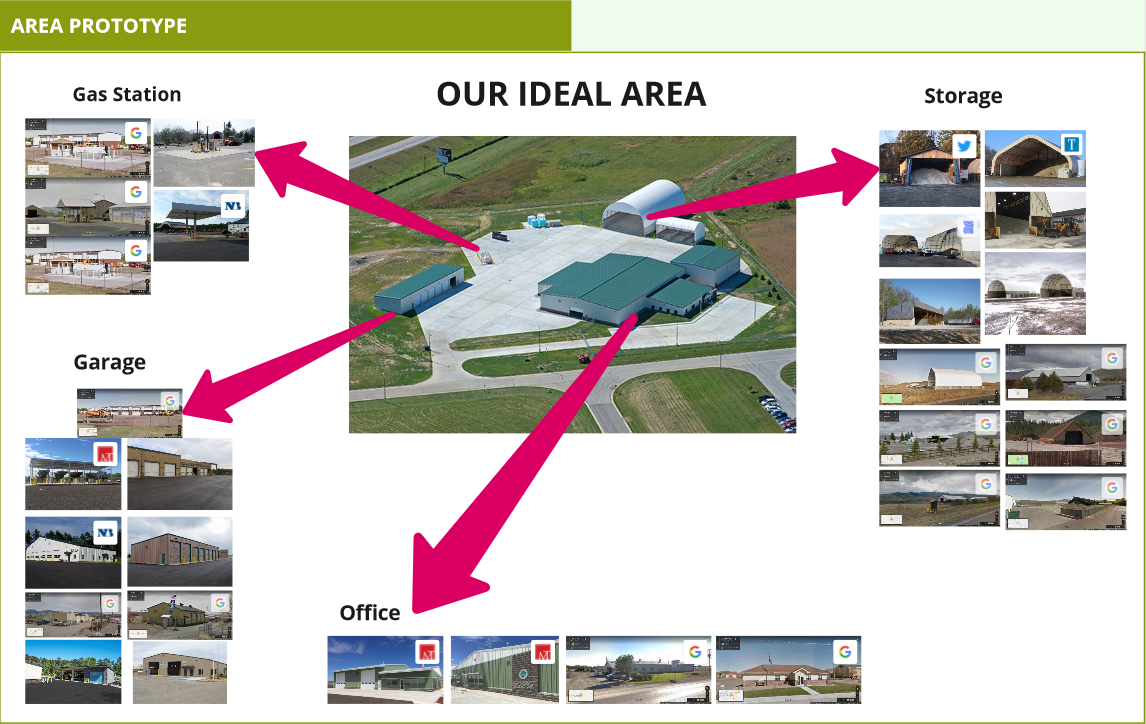
Some aspects of the researchers’ work are closely related to understanding how the world functions in general. This can be illustrated by how the department is involved in the process of designing a depot. In our games, a depot is a place where players pick up and deliver cargo. Its creation requires the collective effort of researchers, 3D artists, map designers, and programmers. A depot has to make sense logically and visually, it has to have the right dimensions to fit inside the map, and, most importantly, it has to make sense economically as part of larger chains of industries that already exist in the game.

Researcher Jiří, who is responsible for most industry-related matters inside Euro Truck Simulator 2 and American Truck Simulator, describes his involvement in the process in the following manner: “Working on a depot, we start by considering things at large. What industries are the most characteristic of a country? Answering that question can be especially thrilling in the case of areas such as the Balkan region where geographical diversity allows for industrial variability. For example, a country with prominent water areas receives a port, whereas another can receive a heavy industrial factory. Once we are done with the macro analysis we move on to the micro level and discuss cargo, surroundings, and the visual aspects.”
(Illustrative image)

It may be captivating to invent ways in which different facilities can make sense inside a larger whole. Even more thrilling may be analyzing the minuscule details of how a particular factory works. We need to understand correctly what is going on technically and logically in every corner of an industrial facility we design, and the researchers are often asked the toughest questions. What’s the role of that building in the industrial process? Where do the trucks park? How does this or that thing works? Only when we have a complete picture of an industrial process can we be sure that our players will receive the most accurate representation of reality and therefore the most thrilling gaming experience.

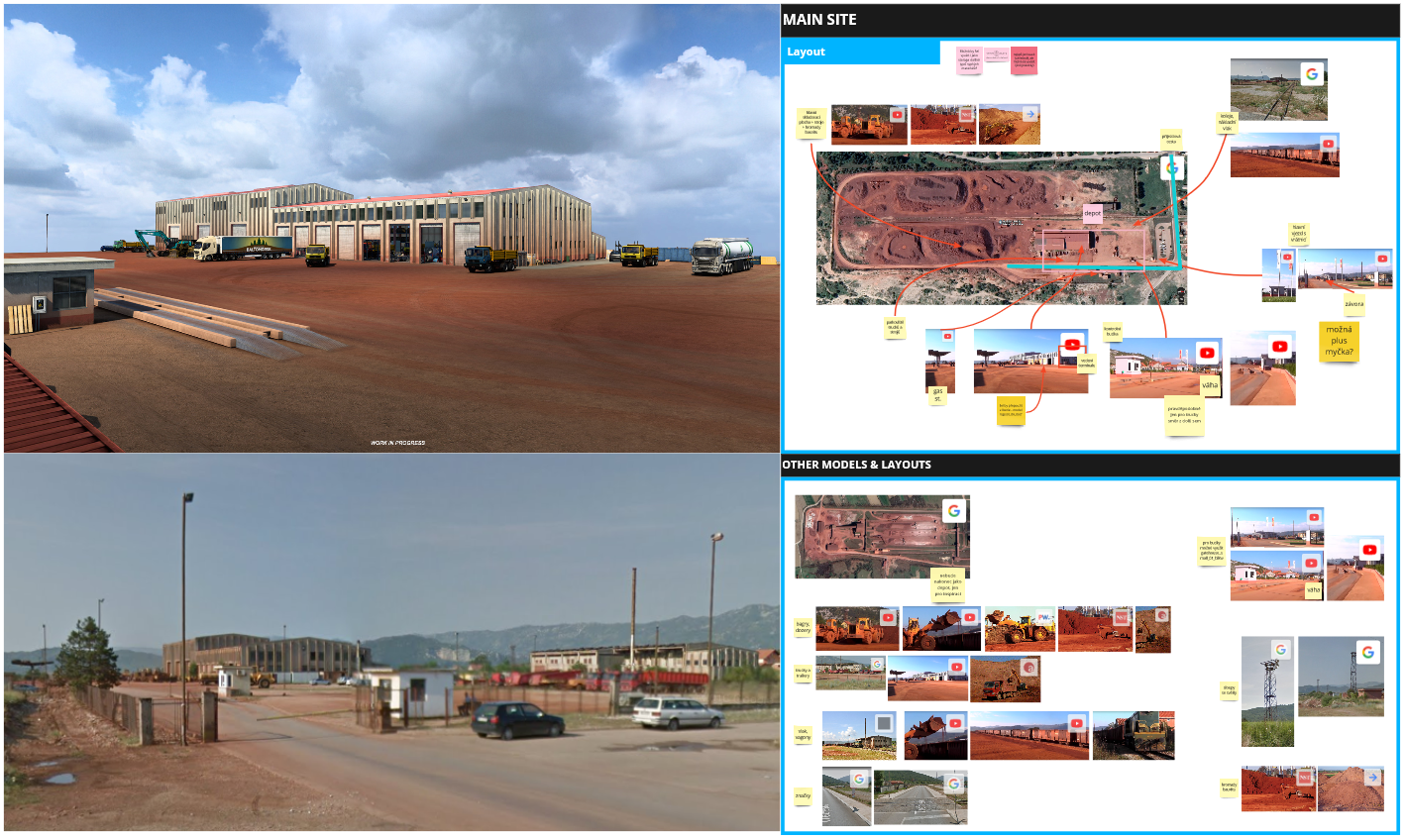
Sometimes finding the required information can be extremely difficult. Since our truck simulation games often depict specific locations that are not very well-known, there can be a lack of references. “We’ve got our little tricks on how to cope with such problematic situations, but from time to time even our proven research methods fall short,” says researcher David, ”In such cases, we have to play the detective and solve the mystery ourselves.” Imagine having to find the location of a gas station or a toll gate when you only have a few low-quality pictures of it. You have to guess where it is situated judging by the surroundings depicted in the photographs. Spot a rock, a terrain, an elevation, or a random building, compare it with a map, and you may be lucky to find the location.
(Illustrative image)

But sometimes the researchers’ work is not about finding the references themselves. Rather, it is about what the eye cannot see: the feeling of a country or a geographical area. It may be something about the country’s culture or the way people live there. As another researcher, Mary, explains: “Often these are the things that we have to imagine based on the references. For example, with vegetation research, it’s one thing to simply look at a tree in the photograph and another to imagine what it feels like to stand near it. In some parts of the Balkan region, we've noticed a lot of pine trees, so we discussed how great it must be to walk around them and feel their majestic smell.  Things like that cannot be seen, but they subconsciously affect our perception of that region." 

Generally speaking, being able to describe the feeling of a country or a geographical area is about understanding what it’s like to be there. Since the researchers study each state or area from various points of view, they can then suggest to our map designers and visual artists how its different aspects correlate. In these cases, the research team’s main responsibility is to describe how the combination of a country’s flora, its road systems, major architectural styles, industries, and many other things result in us being able to say that it is exactly this particular country and not another.

(Illustrative images)

We’d like to thank Raven and other members of the research team for all the information provided and their amazing work at SCS overall. Special thanks go to researcher Anton for putting this information down in written form. 

Hopefully, this detailed information was useful to you, our #BestCommunityEver, but if you still have any questions make sure to ask them in the comments or tag our social media profiles (Twitter, Instagram, Facebook, TikTok) and ask us over there.
Friday, November 25, 2022

A Trip Down the Memory Lane

Phew, how time flies! It feels like yesterday when we were celebrating two decades of SCS Software and now here we are five years later acknowledging an interesting number once again. The year 2022 marks 25 years since our company began its existence in the video game industry!

On this occasion this past Monday, we hosted a big party for all our developers and a limited number of guests in one of the most modern clubs in Prague – EPIC Prague – where we had a lot of fun, brought back some nostalgia, prepared surprises for everyone, enjoyed a lovely birthday cake, and more! All this while having a good time together celebrating this amazing anniversary.

To remind ourselves of the stretch of the road that has brought us to where SCS Software is now in 2022, we have created a little documentary video for the team. While it was originally intended only for internal use, we have realized that all dedicated fans in the #BestCommunityEver may appreciate getting a glimpse of the memories of some important moments in the history of our company. But, who knows, you all might learn something about us that you didn’t know if you give the video a try!

We’d like to thank you all for your incredible and continuous support and we hope you’ll stay entertained with all the cool stuff ahead. We wouldn't be here without you all! It’s been an awesome ride so far, so, here’s to 25 more years. We’ll see you all on the road!

Friday, April 29, 2022

Under the Hood: Concept Art

It feels like it has been a while since our latest Under The Hood blog episode. This series was created to bring to you some cool behind-the-scenes information from the development of our games and the work of our team members in general. We are glad to let you know that we have another exclusive peek for you, this time about the role of Concept Art in our games and a closer look at some of our artists and their responsibilities!

Back in the day, as a smaller and less skilled team of enthusiasts, we were creating everything for our games on our own, sometimes without proper experience. Therefore we used to take inspiration from the world around us, often bending it to our needs. And even though those times were fine and we like to reminiscence about them, it is also good that we are growing and we now have so many new and talented colleagues that can help us with how our games and the assets within them can be made. 

Along the way, we have discovered the beauty of concept art which we never thought could offer so many opportunities and usage means within our trucking titles, as we were used to the idea of concept art being more fitting for RPG games or similar genres. But it is so exciting how our new and experienced colleagues (especially Annie who was our first Concept Artist) opened our eyes and showed us the undeniable importance of this particular department.

Concept Art has found many unique uses within our games and it helps a great deal with connecting several different aspects of the in-game world in order to breathe a sense of realism and life into it. Additionally, our artists are capable of creating much more accurate graphical designs and assets, which offers invaluable support to the other teams and takes the pressure off their shoulders.

Here are some examples along with screenshots of what concept art involves in our games:

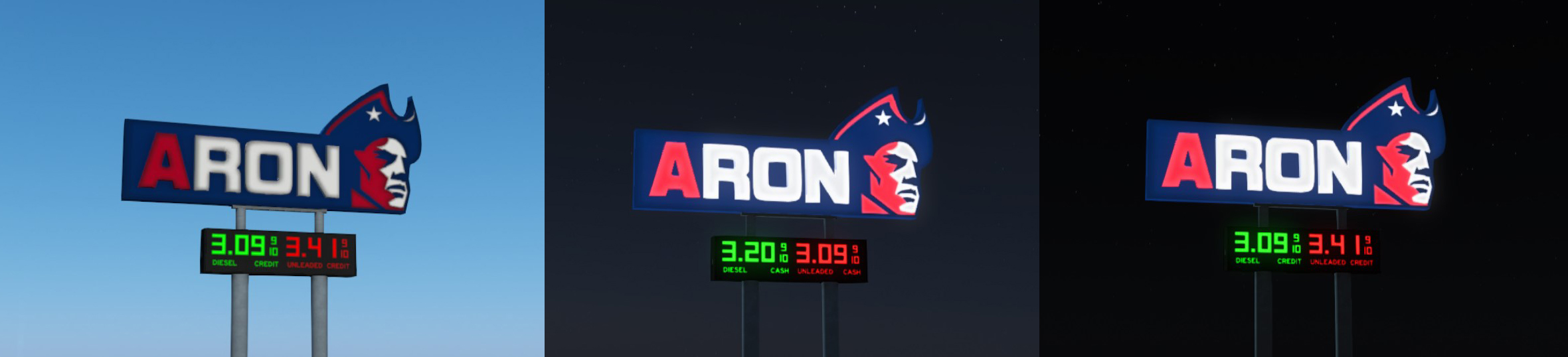
In-game advertisements, billboards, and banners

In-game brands and their unique logos, names and skins for trailers/vans/cars


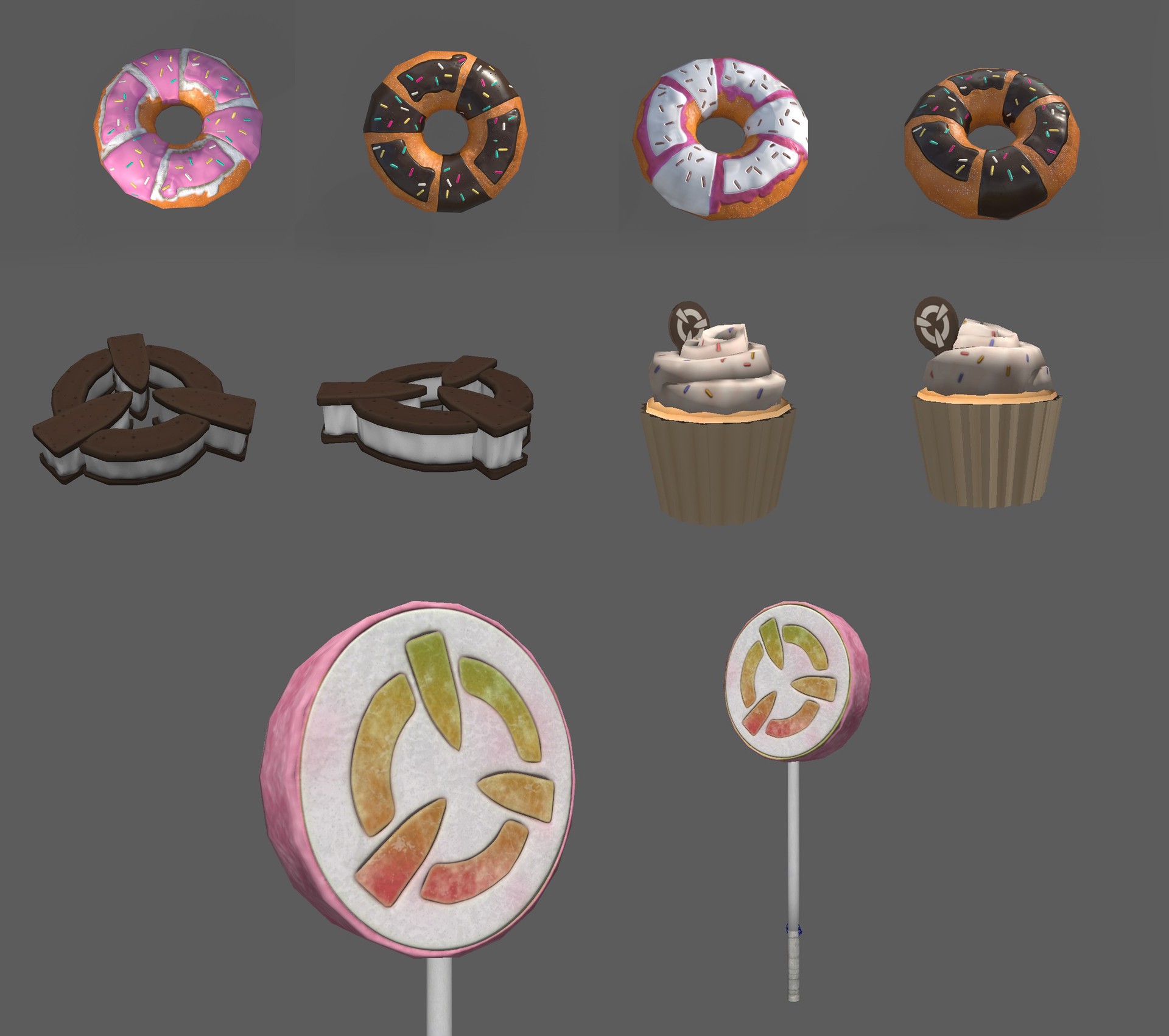
In-game fast-food chains and their advertisements and other elements such as totems, banners, drive-through stands, logos

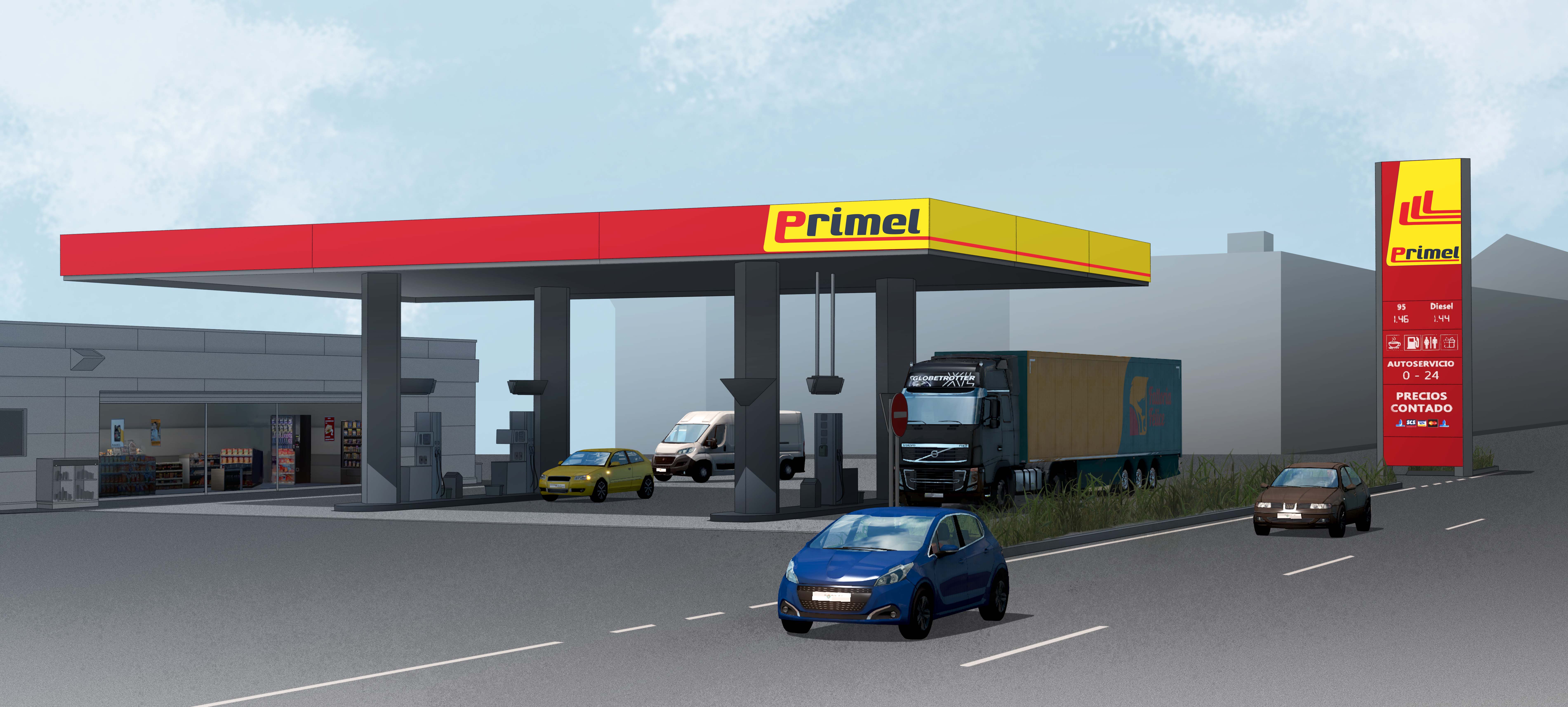
In-game gas stations

In addition to all of these examples, some awesome artwork is (and might be) also occasionally used for our microsites and their extras section, and looking into the future, we might also test the waters by creating special posters or unique collector edition artbooks. In a similar fashion, the skills of our colleagues are sometimes put to the test when creating original designs for T-Shirts dedicated to new map expansions.

There are currently 4 Concept Artists in SCS Software (2 for ATS, 2 for ETS2), and we have sat down with all of them in order to ask them a couple of personal questions about their responsibilities and their opinion on this specific position and working at SCS as a whole. Here is a summary of everything that they had to say from their perspective!


Annie

I was hired in January 2020. At the time I was the only 2D artist working in assets, so I was involved with both ATS and ETS2. The position was brand new, and eventually, with the ever-increasing amount of workload that has become too much for one person to handle, I moved to work on ATS exclusively. Apart from concept art for brands, props, and buildings for ATS, I am also sometimes involved with designing truck skins, vehicle looks, cosmetic items, and graphics for marketing purposes.

I’ve been involved in the development of Iberia, Colorado, Wyoming, Montana, and Texas and I’ve done work for the Austria and California reworks too. I’ve also designed many of the props in the ATS & ETS2 cabin accessories DLC. My favorite projects I’ve worked on have been fast-food chains for ATS, Cabin accessories props, and then… some things we haven’t announced yet (smirk).

What I love about my job is the vast variety of tasks that come my way, as well as the freedom I am presented with. I also enjoy making our in-game world feel more real and connected - whenever I create a new brand, I always think about all the different ways we could incorporate it into our world. On the other hand, the most challenging thing about my job is when I have a deadline to meet but I am completely "bankrupt" creatively when it comes to my ideas and imagination. 

When it comes to the software and hardware I use, I currently work in Adobe Photoshop and Adobe Illustrator. I also use a graphic tablet - in my case, a small Wacom Intuos Pro. Although, eventually, I’d like to expand my repertoire and slowly venture into the world of 3D modeling!


If there’s something I want to suggest to someone who wants to work as a 2D artist for a company that at a first glance may seem like it’s got no need for 2D artists, apply anyway. That’s exactly how I got hired at SCS - I called HR, asked if they were looking for concept artists, told the company what I can do, and sent them my CV and portfolio. Even though I was initially told there was no such position open at SCS, I was contacted again 3 weeks later and invited to a job interview because a need for a 2D artist had just arisen. 


Adel

I was hired in January 2022 as a 2D Graphic Designer for ETS2.

Most of all I like the variety of tasks and complete freedom of the work process. Also, I love the fact that there is a variety of countries in ETS2, so every texture and art you design for a particular map DLC will be different from others because of cultural differences.  

I like to imagine what this or that object could look like, but most of all I love the visualization process itself and the ability to use my creative side. I love the branding part, to imagine what colors would be used, how ads will be looking, and so on. The hardest part, interesting enough, is to imagine the concept itself. 

The most important software for me is Adobe Photoshop, along with Adobe Illustrator. However, I can’t imagine doing things without listening to Spotify at the same time! Regarding hardware, I am working on a PC, with Wacom Tablet and IPad.

For anyone interested in creating artworks or concept art, I would suggest trying and taking any chance to get a job in the field. You shouldn’t give up if you want to work in the gaming industry. 


Petr

I came to SCS from another gaming company as a 3D Artist, but since I also have many years of experience with promotional graphics, I also help with 2D concepts and asset design. In addition to concept art, I also create assets for ATS, so I work on  DLCs, such as Colorado, Wyoming, Montana, Texas, and other projects you can look forward to!

Working at SCS Software is a diverse, creative job, and I'm happy to have the opportunity to design anything new and translate my ideas into logo design, assets, etc. The most difficult thing, however, is being creative every single day.


In regards to software, I am using Adobe Photoshop for general work, and another software for vector and logo designs.

To anyone who is thinking about applying for this or a similar position, I’d advise them to not be afraid and try it. A good art concept is always appreciated, and having the opportunity to progress it to the final form in a project is absolutely invaluable.


Karina


I joined SCS in October 2021 and took over the work on ETS2 from Annie. My first tasks were dedicated mostly to the concept art of new companies and to the redesign of some older brands. With time, the job became more and more exciting. I got a chance to work on some concept art for gas stations, buses, trams, and also new company signs. 


I particularly enjoy the variety of work. There are always different tasks and challenges. The best part of concept art for me is when you actually see your design in the game. It is no longer only a picture but it is something that will interact with our ETS2 world and be real in a way. The hardest part is always to find a balance between what I like, what is expected, and how things look in the real life.


At work, I use Adobe Photoshop, Adobe Illustrator, and our map editor to see how the texture looks with another object. I also work in Maya since I have some experience with 3D as well.


I applied for a 3D graphic position initially. Later on, our HR saw my 2D works, and then 2D graphic position was offered to me. So, I believe this is what you might have heard many times but it is true. If you want something, do it, just send your CV anyway or call a company. There is no crime in just asking and you never know, maybe this company is in need of you right now!


We’d like to thank you all very much for reading this massive article. We hope it was interesting for you to find out more about how things are done behind the scenes, or, pardon us, under the hood. We know you love these pieces of the in-game worlds and we will do our best so you can see more new brands, fast-food chains, advertisement assets within the game, new gas stations, companies, and much more in the future!

We reserve the right to change, adjust, use, or don't use at all any of the images shown and presented within this article. Most of them are meant and used as inspirational or illustrative assets during the process of development of our games and DLCs, but not as a promise of future content.